
Mental Health Matters
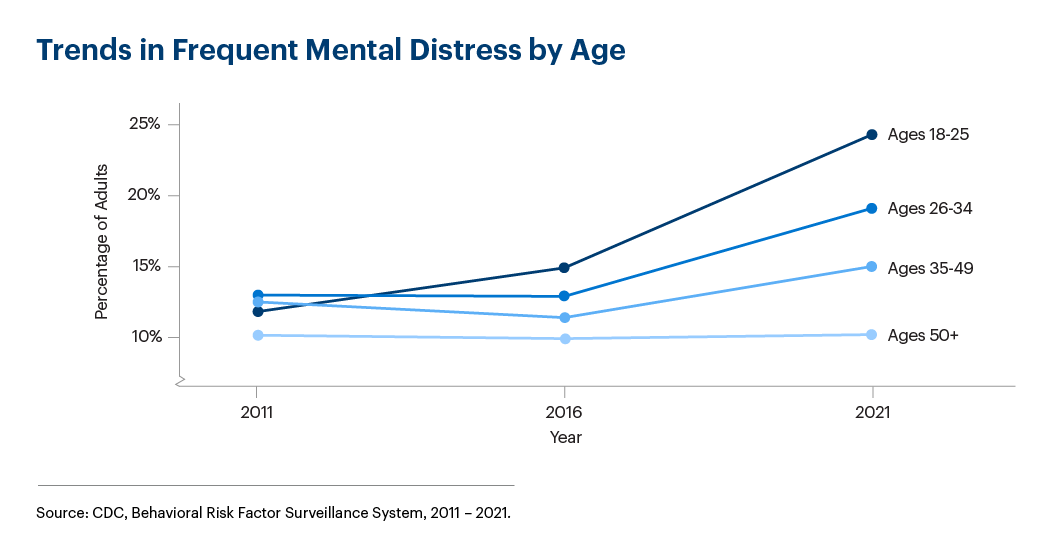
Addressing mental health issues in young adults aged 18-25 is crucial as this transitional period often brings stressors that can significantly impact their well-being and future success. By providing support and resources, we can help this vulnerable group navigate challenges, fostering resilience and promoting healthier outcomes as they embark on their personal and professional journeys.
Did you know that
fitness and community support
are likely to improve
mental health conditions?
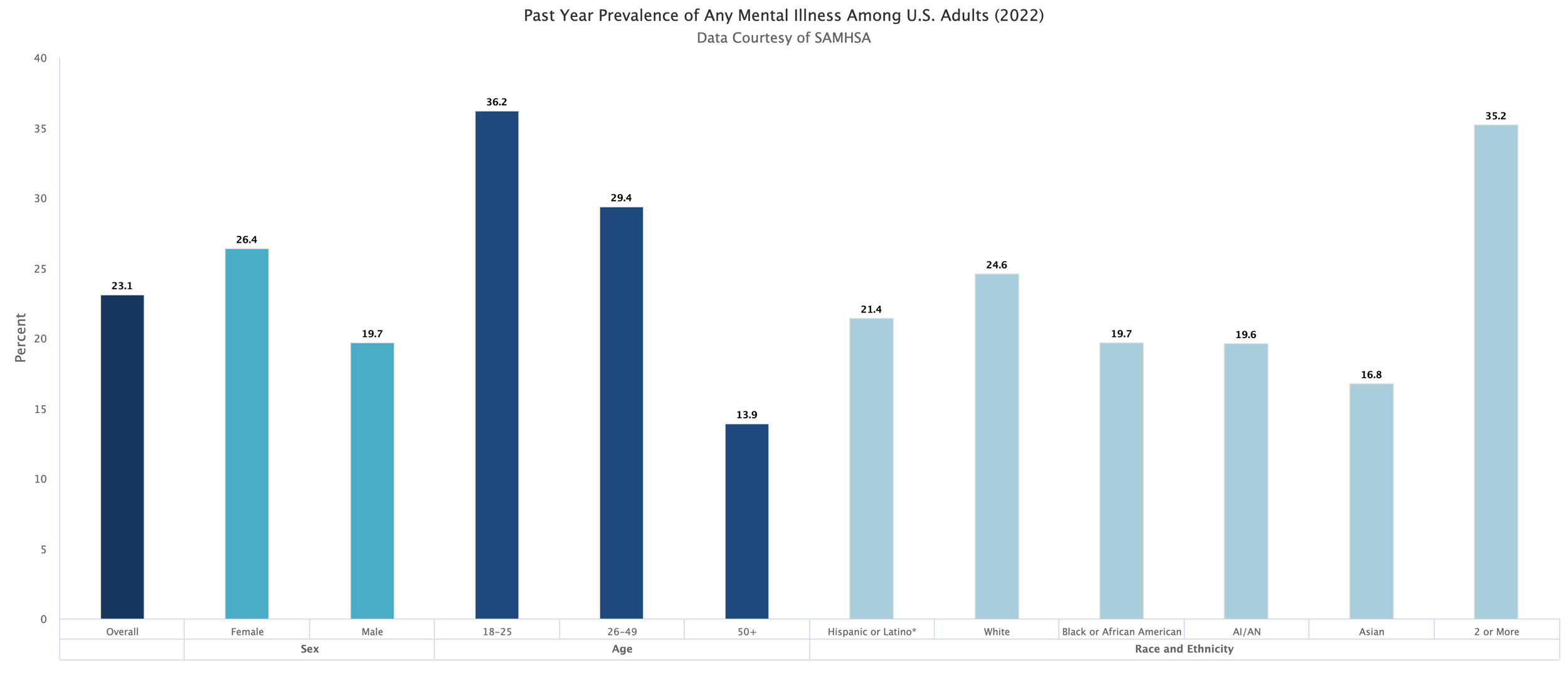
Young adults are more likely to experience mental illness.
Young adults aged 18-25 years had the highest prevalence of AMI (36.2%) compared to adults aged 26-49 years (29.4%) and aged 50 and older (13.9%).
Data retrieved from the National Institute of Mental Health
WHAT ARE THE CONTRIBUTING FACTORS?
From the Harvard Graduate School of Education’s news article, Mental Health Challenges of Young Adults Illuminated in New Report
A lack of meaning, purpose, and direction: Nearly 3 in 5 young adults (58%) reported that they lacked “meaning or purpose” in their lives in the previous month. Half of young adults reported that their mental health was negatively influenced by “not knowing what to do with my life.”
Financial worries and achievement pressure: More than half of young adults reported that financial worries (56%) and achievement pressure (51%) were negatively impacting their mental health.
A perception that the world is unraveling: Forty-five percent (45%) of young adults reported that a general "sense that things are falling apart” was impairing their mental health.
Relationship deficits: Forty-four percent (44%) of young adults reported a sense of not mattering to others and 34% reported loneliness.
Social and political issues: Forty-two percent (42%) reported the negative influence on their mental health of gun violence in schools, 34% cited climate change, and 30% cited worries that our political leaders are incompetent or corrupt.